America's Great Loop is a roughly 6,000-mile circumnavigation of the eastern United States and part of Canada. For some people it is this season's route. For many more, it begins years earlier—with maps spread across a table, boat listings open in a dozen tabs and a growing list of questions about whether the dream can become a workable cruising plan.
For the dreamers and researchers
You do not need the boat yet to start planning well.
Start with the route and the life you want aboard, then work backward to the vessel. A Loop boat has to fit its crew, budget and preferred waterways—not somebody else's idea of the perfect trawler. These are the measurements and tradeoffs worth putting into a comparison sheet before a showing or sea trial.
Dimensions that affect the route
Record the boat's true air draft with antennas and arches in their normal and lowered positions, plus water draft, beam and length overall. Those numbers affect bridge, lock, canal, marina and haul-out options.
Fuel range you can defend
Estimate usable—not merely tank-label—capacity, realistic cruise-speed consumption and a conservative reserve. Ask how hull condition, current, wind, generator use and speed change the number.
Systems you can live with
Compare shore-power requirements, battery capacity, charging, refrigeration, climate control, anchoring gear, dinghy handling, sanitation and access to engines, filters, pumps and seacocks.
Ownership beyond the purchase
Budget for survey and sea trial, taxes and documentation, insurance, training, refit work, dockage, fuel, maintenance, repairs, haul-outs, communications and travel away from the boat.
Five technical questions to ask about any potential Loop boat
- Can its height, draft and range support the route variants we care about? Check those answers against current AGLCA and official waterway information, not an old listing.
- Can both crew members operate the important systems? Docking, anchoring, VHF use, navigation, shutdowns and emergency procedures should not belong to only one person.
- Can we reach service items? A beautiful engine room is less useful if routine filters, belts, strainers, batteries or seacocks are nearly inaccessible.
- Can we insure it for our experience and intended itinerary? Get real indications before purchase; vessel size, age, survey findings, geography and operator experience can all matter.
- Can we practice before departure? Plan shakedown cruises with nights at anchor and at marinas, rougher-weather judgment calls, fueling, pump-out and at least one simulated systems problem.
Buy enough capability for your intended route, but do not confuse more boat with more readiness. Training, maintenance knowledge, schedule margin and crew communication travel farther than an impressive equipment list.
AGLCA's current planning resources include a route overview, boat-buying information, a cost calculator, events and a detailed FAQ covering air draft, water draft and fuel range. Use those as living references because waterway restrictions and recommended practices can change.
Start with AGLCA's planning hubReview the technical FAQExplore boat-buying resources
For Loopers underway now
Planning Brunswick as your next Georgia stop.
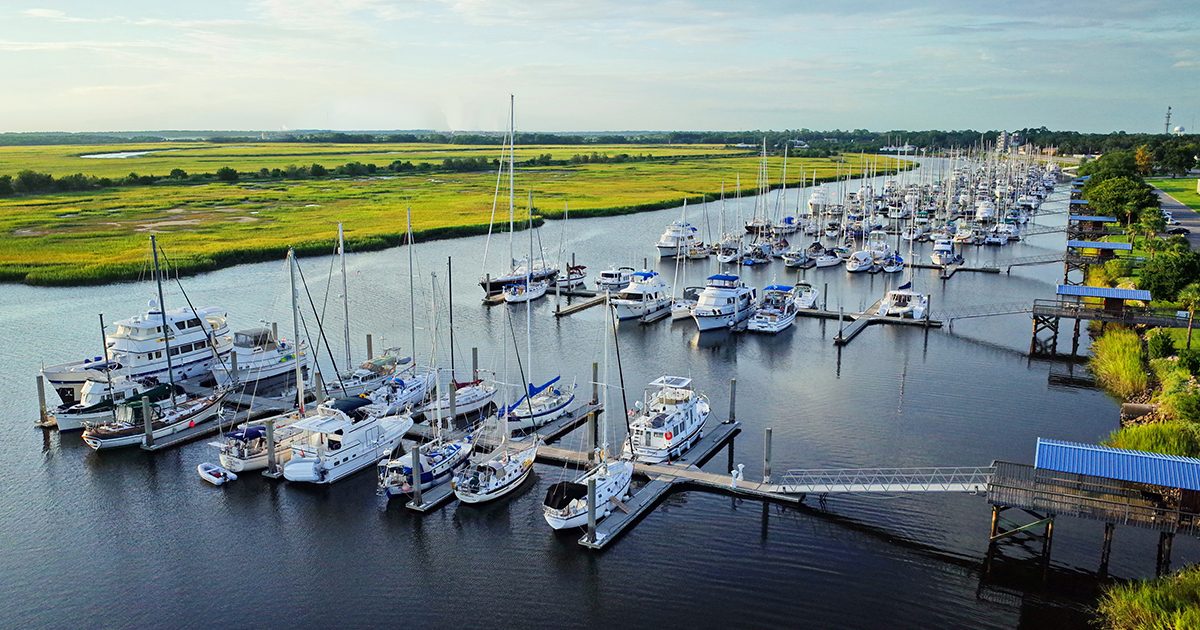
Brunswick Landing Marina is northwest of Atlantic ICW Mile 680, reached from the Brunswick River through the East River. It can be a simple overnight, but the stop becomes more valuable when you group fuel, pump-out, laundry, provisioning, maintenance and crew rest instead of scattering those jobs across several short stops.
Before you turn in
Call or hail the Dock Office.
Contact the marina on VHF Channel 16 or 912-262-9264 as you enter the East River. Share your vessel name, length, beam, draft and power needs. The team will provide current slip directions and meet you to help with lines.
- Use current charts for your exact route
- Check tides, currents, weather and notices
- Confirm berth-specific depth and utilities
- Keep wake down near the working waterfront
- Wait for a slip assignment before docking
Build the stop around the time you have
Arrive with daylight margin, fuel if needed, connect shore power, walk the grounds and give the crew a real night of rest.
Add laundry, pump-out, provisioning and time in historic downtown Brunswick. Make a written list before arrival so errands do not consume the visit.
Discuss service needs early, especially if work may require parts, specialist coordination or haul-out. Compare current dockage options and leave room for weather.
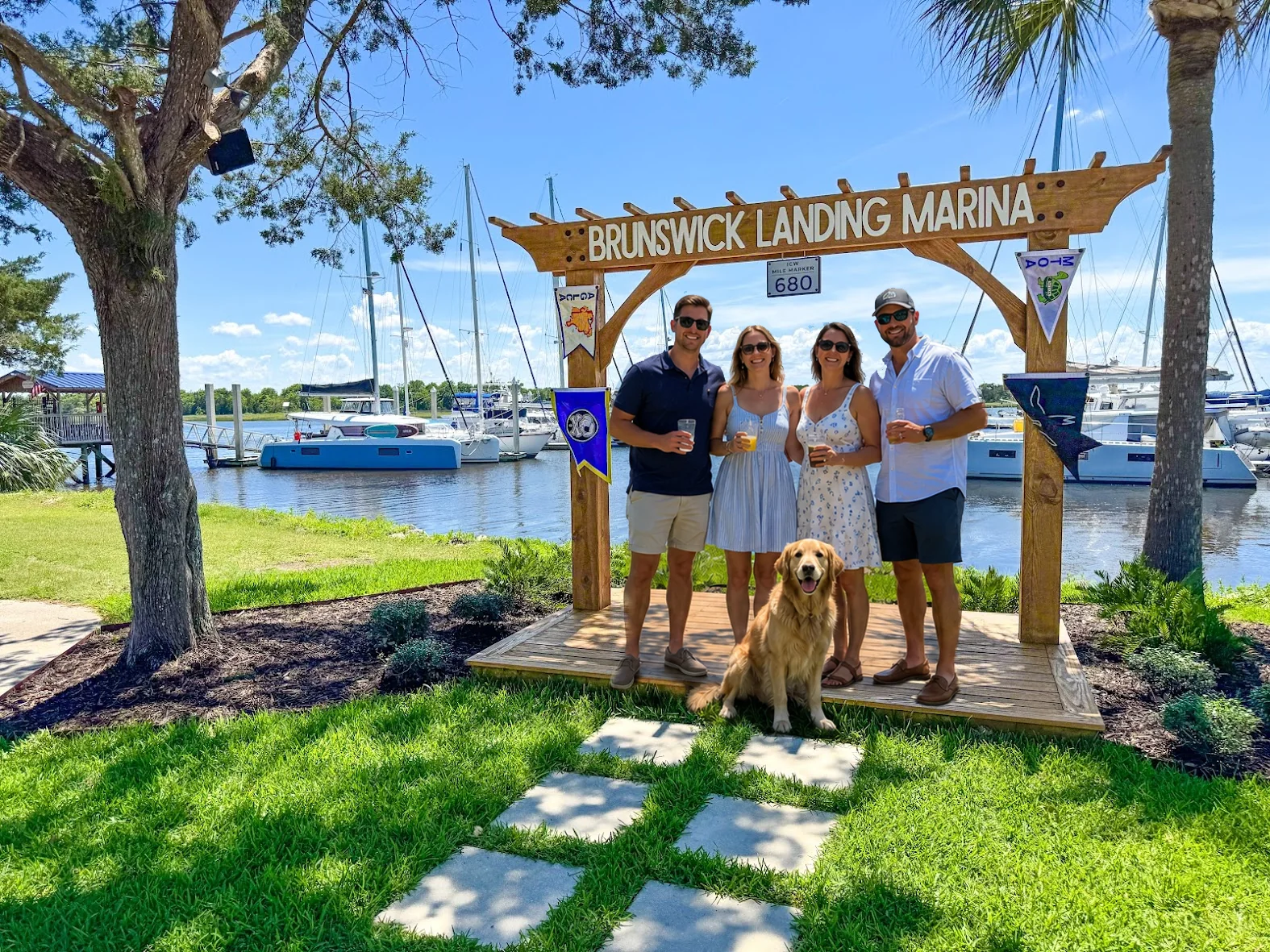
From the marina, crews can walk toward downtown Brunswick for restaurants, shops and practical errands. On the property, marina amenities and everyday dock life give Loopers a chance to swap route notes with other cruisers rather than treating the stop as a fuel receipt and a sleep.
Review marina amenitiesSee Boat Yard servicesPlan time downtownCheck current dockage rates
Before the next leg
Use dock time for a deliberate technical reset.
A short inspection can catch the small change that becomes tomorrow's delay. Adjust this checklist to the vessel and follow manufacturer procedures; it is a planning prompt, not a substitute for qualified service.
- Engine oil and coolant levels; belts, hoses and visible leaks
- Fuel filters, Racor bowls and known tank or transfer issues
- Raw-water strainers, seacocks and bilge condition
- Battery state, charging sources and shore-power connections
- Propeller, running-gear or steering symptoms noted underway
- Navigation-light, VHF, AIS and chart-update status
- Anchor, rode, windlass, dock lines and fender condition
- Weather window, fuel plan and bail-out stops for the next leg
Write down RPM, speed, voltage, temperatures, alarms, vibration or smoke while the details are fresh. A precise symptom history is more useful to a technician than “something seemed off.” If a condition may cause damage or create a safety risk, stop and get qualified help before continuing.
Trusted planning links
- AGLCA Great Loop route overview
- AGLCA route segments and sample itineraries
- NOAA Electronic Navigational Chart viewer
- NOAA tides and currents
- U.S. Coast Guard Local Notices to Mariners
Quick answers
Great Loop Brunswick, GA FAQs
What ICW mile marker is Brunswick Landing Marina near?
Brunswick Landing Marina is northwest of Atlantic ICW Mile 680. The marina is reached from the Brunswick River through the East River. Always use current charts and contact the Dock Office for current arrival instructions.
Does Brunswick Landing Marina offer an AGLCA fuel discount?
AGLCA members staying at Brunswick Landing Marina as transients receive $0.50 off per gallon of fuel. Mention your membership and confirm the current benefit with the Dock Office when planning your stay.
How should Great Loop boats contact the marina when arriving?
Contact the Dock Office on VHF Channel 16 or call 912-262-9264 as you enter the East River. The team will provide your slip assignment and directions and meet you at the slip to help with lines.
Is this guide useful if I have not bought a Great Loop boat yet?
Yes. It explains the vessel measurements, fuel range, systems, training, insurance, budget and shakedown questions that future Loopers should research before choosing a boat or departure date.
Make Brunswick fit your Loop.
Send your dates, vessel dimensions, power requirements and any planned service work before arrival. The marina team can confirm current availability and help turn a Georgia stop into useful time for both boat and crew.
Why Brunswick fits an ICW passageTen reasons cruisers stop herePlan a boat renaming ceremony