
Watch: conditions are possible
A hurricane or tropical storm watch is generally issued about 48 hours before tropical-storm-force winds. Your vessel plan should be underway or complete.

The boat owner's storm-season field guide
The boat owner's storm-season field guide
A complete plan for choosing a strategy, securing the vessel, protecting people and returning safely after the storm.
Life safety comes first
Wind, surge, debris and dock damage can close off a safe exit without warning. Complete vessel preparation early, then follow current National Hurricane Center forecasts, local emergency orders, your insurer and marina instructions.
Read the whole risk
The forecast cone describes where the storm center may travel; it is not a boundary for impacts. Wind, storm surge, rainfall, tornadoes and dangerous marine conditions can reach far beyond it.
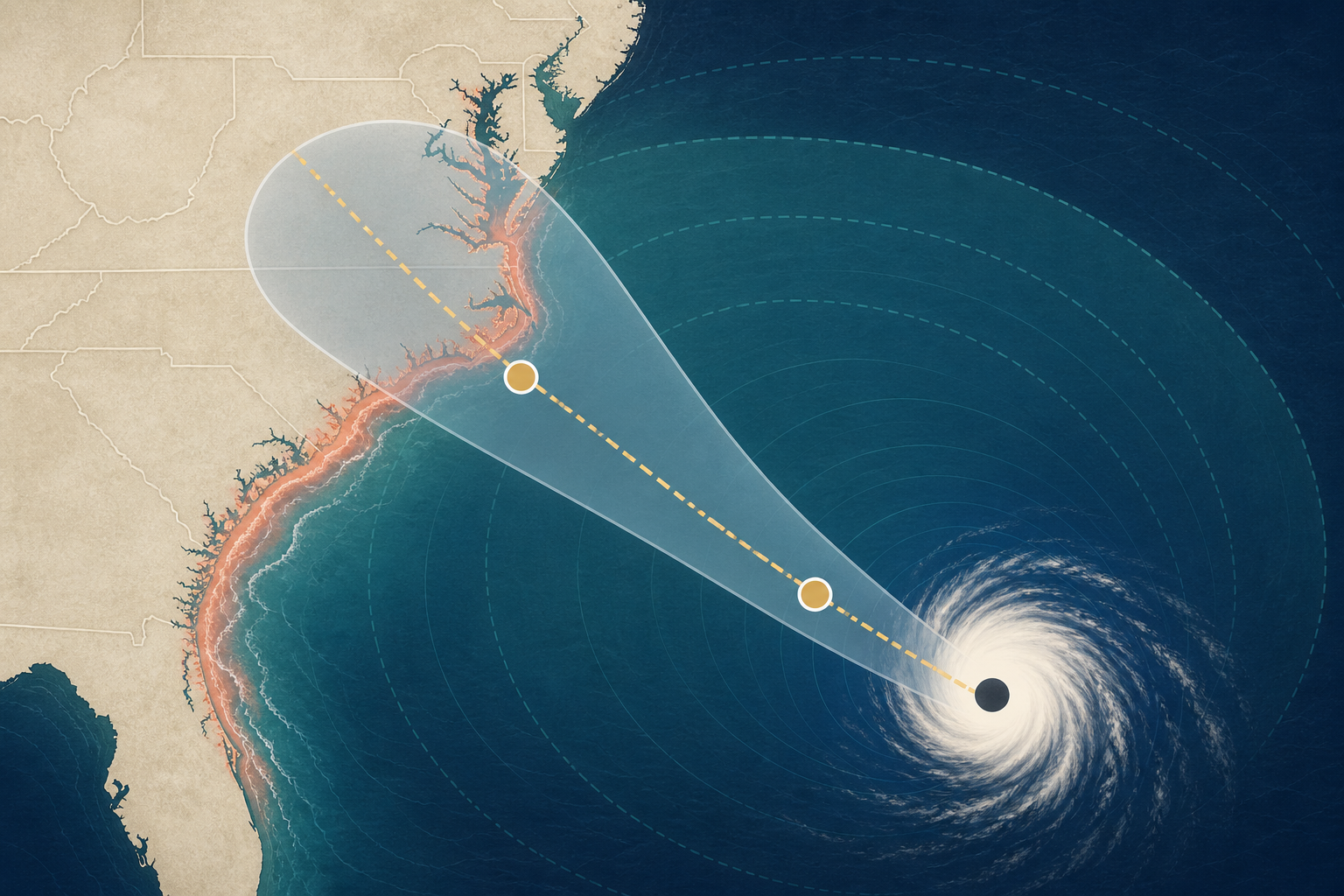
One possible path for the storm center—not a line of safety.
The probable area for the storm center. It does not show every impact.
Wind, surge, rain and marine hazards can extend far outside the cone.
A hurricane or tropical storm watch is generally issued about 48 hours before tropical-storm-force winds. Your vessel plan should be underway or complete.
A warning is generally issued about 36 hours before tropical-storm-force winds. Outside work may soon be dangerous.
Storm surge is wind-driven water above the predicted astronomical tide. Storm tide, waves and rainfall can add to the total water threat.
A decision timeline
These are planning triggers, not a forecast. Begin sooner for large vessels, complex systems, restricted bridges, limited haul-out capacity or any trip needed to reach safety.
Choose a strategy
No single answer fits every boat or every storm. Decide with the marina or yard, the vessel manufacturer and your insurer—then confirm what is actually available.
Often the strongest option when the vessel, yard, support system and site are suitable. Capacity disappears quickly, and safe storage requires qualified blocking, stands and tie-down decisions.
Confirm enrollment, activation, lift limits, timing and insurance requirements in writing.Explore Hurricane Haulout & Boat StorageSometimes necessary, but it demands a location-specific plan for wind, surge, tide, waves, dock travel, neighboring boats and line loads.
The marina must approve the arrangement. A sheltered harbor reduces some exposure; it does not remove storm risk.Request a marina reservationIn-water preparation
This checklist supports—but does not replace—a berth-specific plan approved by the marina. Fixed docks, floating docks, pilings and moorings behave differently as water rises.
Haul-out and yard storage
Safe land storage depends on vessel fit, ground conditions, blocking, stands, tie-downs and professional judgment. Do not alter stands, blocks, straps or drain arrangements after the yard secures the boat.
Explore Hurricane Haulout & Boat StorageVessel-specific details
Remove sails rather than relying on furling systems. Secure the boom, center or remove movable travelers, quiet halyards, and have standing rigging and mast-related loads considered in the yard or berth plan.
Remove bridge enclosures and exposed canvas, secure cockpit and engine-room openings, check exhaust routes and bilge systems, and account for large profile area above the waterline.
High windage and wide beam create different loads and may limit haul-out or storage options. Confirm lift, blocking, tie-down and berth suitability with the yard well in advance.
Build a vessel-specific written plan with the captain, insurer, marina and qualified contractors. Confirm crew, tug or pilot needs, shore-power shutdown, tenders, cranes and vendor access before activation.
Owner readiness
Boat preparation depends on current information and a reachable decision-maker. Set that up before hurricane season, especially if you travel or leave the vessel unattended.
Give a trusted person written authority to move or secure the vessel in your absence, along with keys, access details and the limits of what they may authorize.
Confirm the owner's phone numbers, alternate contact and current certificate of marine insurance are on file.
Keep registration, insurance, marina agreement, inventory, photographs and a recent dockage invoice accessible away from the boat.
After the storm
Marina access may remain closed after local reentry begins. Bring a recent dockage invoice if authorities request proof of your connection to the marina; it does not guarantee entry.
Treat downed wires, damaged shore power, unstable docks, submerged debris, fuel odors and strained lines as hazards. Keep ignition sources away from leaks.
When safe, photograph damage before moving or discarding items. Notify the marina and insurer, and prevent further damage only when it can be done safely.
Report spills, sheens, leaking batteries and hazardous debris promptly through marina staff and the appropriate emergency or pollution-response authority.
Planning at Brunswick Landing
Our harbor and dock system reduce some exposure, but no marina can remove the risks created by wind, surge, flooding, debris, neighboring vessels or equipment failure.
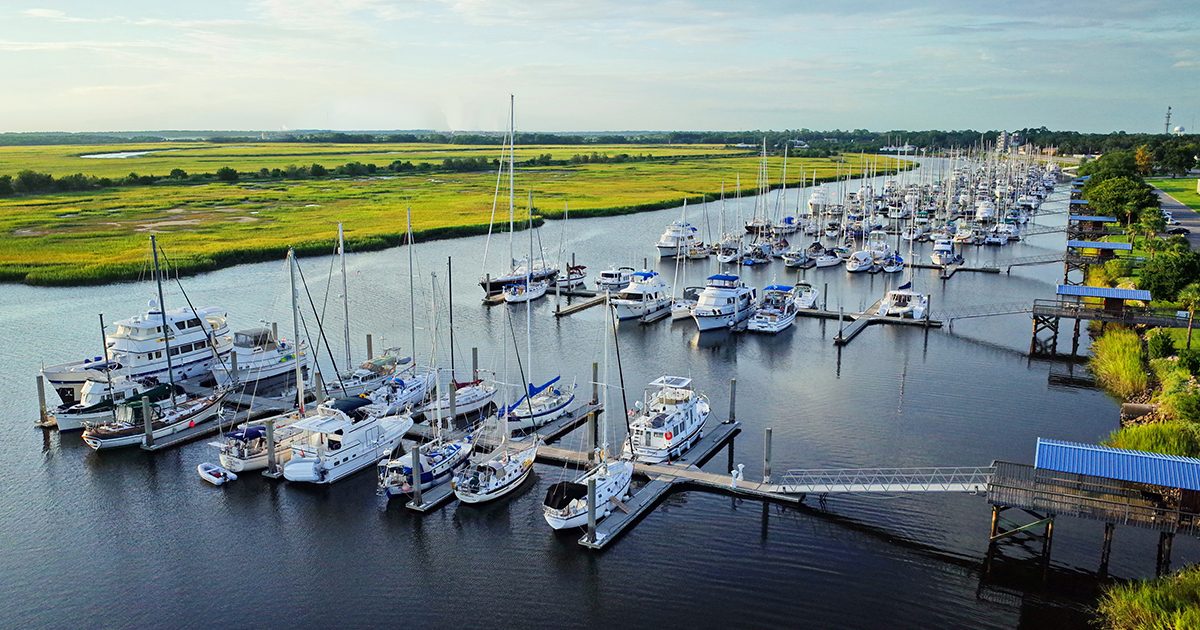
A former U.S. Navy hurricane-hole setting sheltered by land on three sides. Explore the documented harbor history.
A heavy-duty wave attenuator, reinforced concrete piles and floating docks help reduce wave exposure and accommodate changing water levels.
Every vessel needs a complete, berth-specific plan, sound lines and chafe protection, current contacts and timely action.
Print-ready summary
Use this as a completion record, then add the steps required by your vessel, insurer, marina and evacuation plan.
Vessel: ____________________ Slip / location: ____________________ Date completed: ____________________
Official sources
Always open the latest advisory. Shared screenshots, social posts and model plots may be old, incomplete or unofficial.
Important: This page is general educational guidance, not a guarantee, storm forecast, engineering design or substitute for vessel-specific professional advice. Current government orders, marina directives, manufacturer instructions, insurance requirements and written agreements control.
Hurricane preparation questions
Build and supply the plan before hurricane season, then begin acting as soon as a system could threaten your area. NOAA advises boaters not to wait for a hurricane warning; a watch is generally issued about 48 hours before anticipated tropical-storm-force winds and a warning about 36 hours before them.
Not in every circumstance. The right choice depends on the vessel, yard, blocking and tie-down system, berth, forecast hazards, insurance requirements and timing. A qualified marina or yard should approve the site-specific plan.
For safety, it is strongly recommended that you not stay aboard during a tropical storm or hurricane. Storm surge, wind, debris and dock failure can make leaving impossible. Finish preparations early and always follow evacuation instructions from local officials.
Before hurricane season, appoint a local agent who can act for you and give the marina current written authorization, contact information and vessel access details. Confirm the scope of that authority with your insurer and marina before it is needed.
No. The former U.S. Navy hurricane-hole setting, land on three sides, wave attenuator and floating-dock system reduce some exposure, but no harbor can eliminate wind, surge, flooding, debris, equipment failure or neighboring-vessel risk.
No. An inquiry is not enrollment or activation. Eligibility, confirmed membership, capacity, activation, vessel fit and current program terms govern service. Contact the Boat Yard well before a storm threatens.
Wait for official reentry guidance and marina clearance. Expect submerged debris, unstable docks, damaged electrical systems, leaking fuel and other hazards. Photograph damage before moving equipment when safe, then notify the marina and insurer.
Your home port awaits
Ask the Dock Office about marina procedures or speak with the Boat Yard about advance haul-out program eligibility.